While much of the world packed away the Christmas lights weeks ago, millions of people will be celebrating Christmas tomorrow — 7 January. No delay. No remix. Just a different calendar and a centuries-old tradition.
In several countries, Christmas doesn’t fall on the familiar 25 December. Instead, it’s marked in early January because their churches still follow the Julian calendar, which runs about 13 days behind the modern Gregorian calendar used globally. Same Christmas. Different clock.
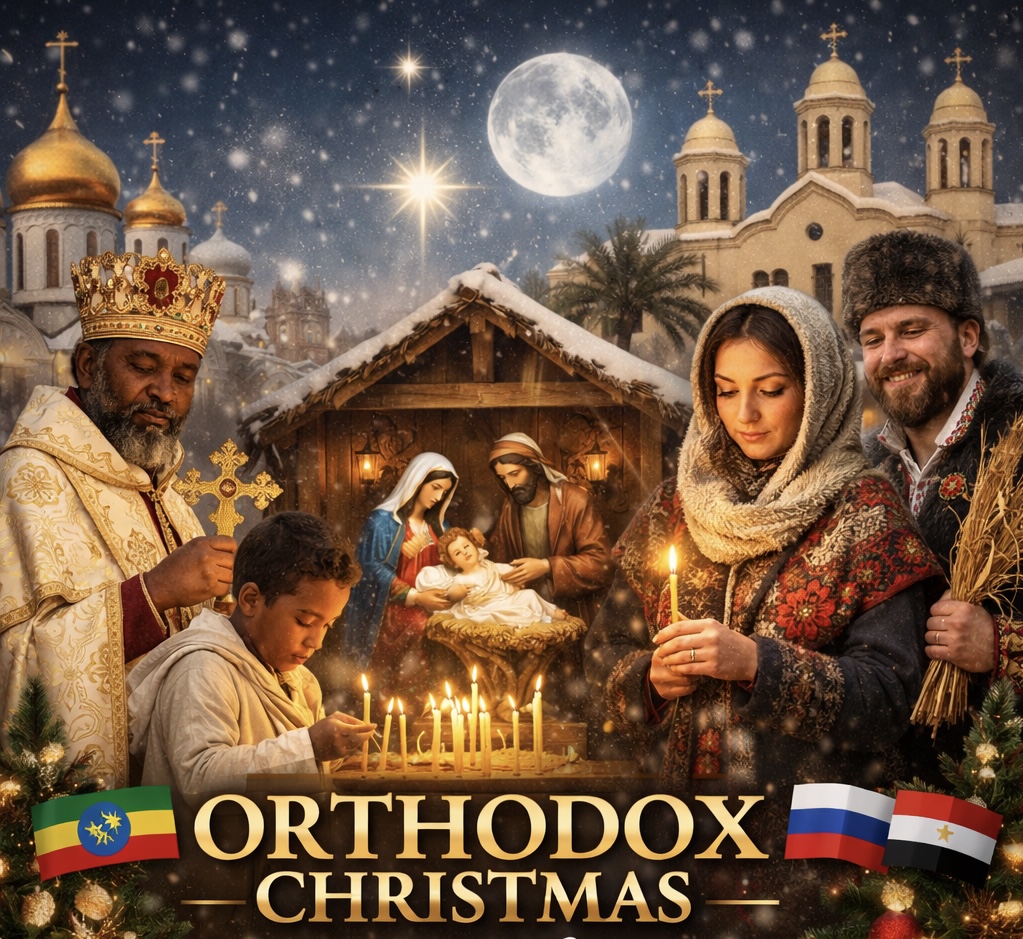
Countries like Ethiopia, Russia, Serbia, Egypt, and Georgia celebrate Christmas on 7 January through Orthodox traditions. For them, this isn’t an “alternative” Christmas — it’s the real deal. Church services, the breaking of long fasts, family meals, and deep spiritual reflection take centre stage.
In Ethiopia, the day is known as Genna. Celebrations begin with long overnight church services, followed by traditional meals and even ancient sporting games. In Russia, Christmas is quieter than New Year’s Day but deeply religious, marked by candlelit services and solemn rituals. Across these countries, the focus leans less on gifts and more on faith, history, and community.